


Geography
At Sampford Peverell C of E Primary School, we believe that Geography helps children to understand the world around them and their place within it. Through studying a range of locations, environments and cultures, pupils develop knowledge of both the physical and human aspects of the world while gaining an appreciation of the diversity of people, places and landscapes that make our planet unique.
Our Geography curriculum is based on Chris Quigley and is designed to inspire curiosity about the world, encourage exploration and develop a sense of responsibility towards the environment. Through carefully planned units of study, children investigate local, national and global geography, making meaningful connections between places and developing an understanding of how people and environments interact thus developing their geography schema.
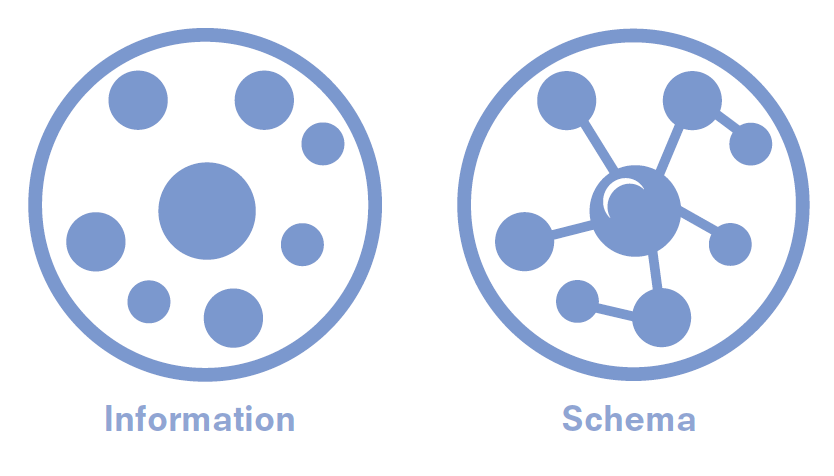
A subject schema is a way of organising knowledge in a meaningful way; it is an appreciation of how facts are connected and the ways in which they are connected. A schema is distinct from information, which is just isolated facts that have no organisational basis or links. The diagram below shows the difference between information and a schema.
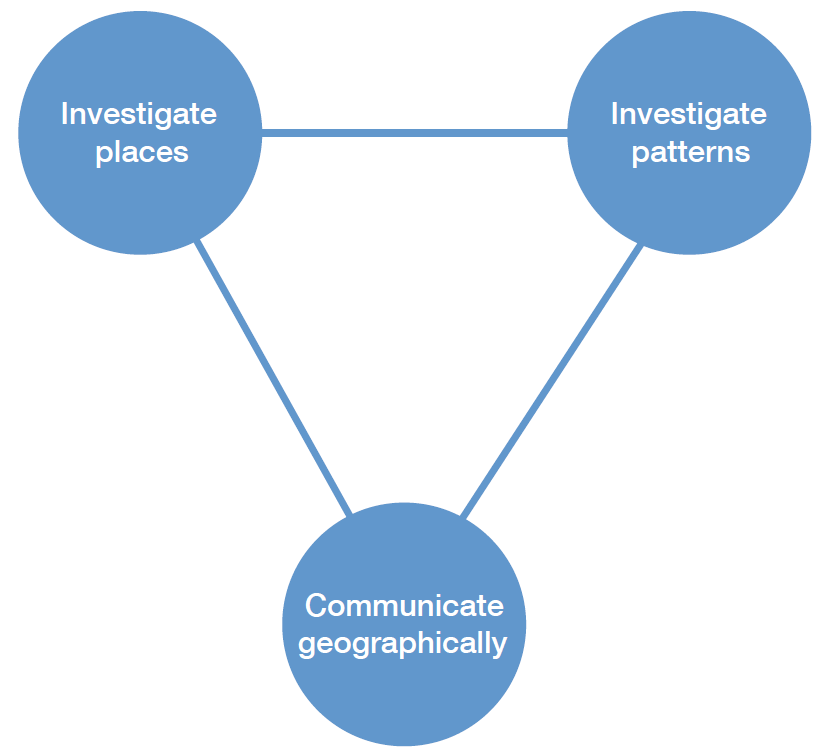
The curriculum is built around three key threshold concepts which form the basis for the geographical schema and provide a framework for progression throughout the school.
Investigate Places
This concept involves understanding the location and characteristics of places around the world. Children learn about physical and human features, compare different localities, and develop knowledge of how places are similar and different. Through studying a diverse range of locations, pupils gain a deeper understanding of their own community whilst developing respect and appreciation for the lives, cultures and experiences of people across the world.
Investigate Patterns
This concept involves understanding the relationships between people, places and environments. Children explore natural and human processes, including climate, trade, settlements, population and the use of natural resources. They investigate how physical and human features are distributed across the world, recognise patterns and connections, and develop an understanding of environmental issues and sustainability. Through this learning, children become increasingly aware of the complex systems that shape our planet and the impact that human actions can have upon it.
Communicate Geographically
This concept involves using geographical vocabulary, fieldwork and map skills to communicate understanding. Children learn to interpret and create maps, use atlases and digital mapping, collect and present data, and draw conclusions from their investigations. Through these experiences, pupils develop the confidence to explain geographical ideas, ask thoughtful questions and present their findings using accurate geographical language.